Tired of Missing Your Bus While Managing Your Health? This App Keeps You on Track—Literally
Have you ever missed your bus because you were too focused on checking your heart rate or logging your steps? Or felt stressed trying to balance a fitness routine with daily commutes? You’re not alone. Public transit can be unpredictable, and tracking your health shouldn’t make it harder. But what if your commute could actually support your wellness goals instead of working against them? Let’s explore how technology is quietly transforming the way we move—and thrive—every day.
The Daily Struggle: When Transit and Health Goals Collide
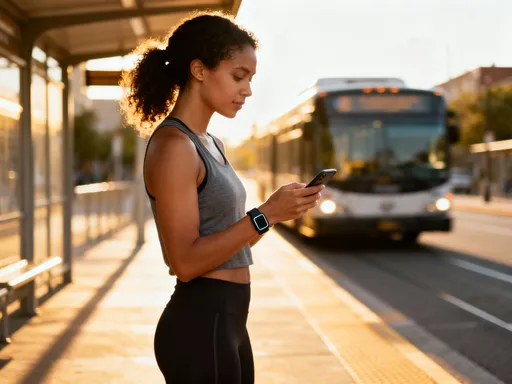
Picture this: you’re standing at the bus stop, eyes flicking between your smartwatch and the arrival time on your phone. Your step count is low, your hydration reminder just pinged, and you still need to take your morning medication. The bus is delayed—again—and now you’re mentally recalculating your entire day. Will you have time to walk the kids to school, make it to your doctor’s appointment, and squeeze in a lunchtime stretch? This isn’t just a moment of stress. It’s a daily reality for millions of women juggling family, work, and personal well-being.
For many of us, public transportation isn’t a choice—it’s a necessity. And yet, the tools we use to manage our health often feel disconnected from the rhythms of real life. We download fitness apps, set medication alarms, track sleep, and log water intake, but rarely do these systems talk to each other. Worse, they rarely consider the unpredictable nature of commuting. What happens when your train is canceled and your 10,000 steps suddenly vanish from the day? Or when you’re so focused on catching your connection that you forget to take your blood pressure medication?
These aren’t small oversights. They add up. Missing a bus can mean missing a meeting. Skipping a walk can break a hard-won habit. And when health tools feel like just another thing to manage, it’s easy to give up. The problem isn’t our discipline—it’s the design. Our apps are built in silos, each demanding attention without understanding the whole picture of our lives. But what if technology could finally start working together—on our terms?
A Smarter Connection: How Integration Simplifies Life
Imagine waking up and opening one app that shows your entire day in a single view. It knows your bus schedule, your doctor’s appointment at 2 PM, and that you’ve been sitting too long during your evening commute. It gently reminds you to stand up when your train is delayed. It suggests getting off a stop early to add a five-minute walk—perfect for boosting your step count without disrupting your routine. This isn’t science fiction. It’s the next generation of personal wellness technology, and it’s already helping people like you live with more ease and intention.
The magic isn’t in flashy gadgets or complicated dashboards. It’s in integration. Modern apps now connect data from wearable devices—like fitness trackers and smartwatches—with real-time public transit systems. Using secure, privacy-protected connections, these tools pull information from multiple sources: your heart rate, sleep patterns, step count, local bus or train schedules, and even air quality reports. Then, they deliver simple, actionable suggestions tailored to your day.
Think of it like a personal assistant who actually understands your life. Instead of forcing you to switch between five different apps, this kind of technology works quietly in the background. It doesn’t add to your mental load—it reduces it. For example, if your wearable detects elevated stress levels during your commute, the app might suggest a breathing exercise or play a calming playlist as you board the train. If your bus is running late, it automatically adjusts your medication reminder so you don’t take it too early. It’s not about doing more. It’s about doing what matters—with less effort.
And the best part? You don’t need to be tech-savvy to use it. These tools are designed with real people in mind—especially those who care for others, manage health conditions, or simply want to feel more in control of their day. The interface is clean, the alerts are gentle, and everything feels familiar, like a conversation with a thoughtful friend.
Real Help, Not Hype: What the Technology Actually Does
Let’s cut through the buzzwords. This isn’t about virtual reality workouts or AI-powered personal trainers. It’s about practical, everyday support that fits into the life you already live. So, what does this technology actually do? First, it syncs your health data with your commute. If your fitness tracker shows you’ve been sedentary all morning, the app might suggest walking an extra block to your bus stop or getting off one stop early. It doesn’t shout at you or guilt-trip you. It simply offers a small, doable nudge—because real change happens in tiny moments.
For people managing chronic conditions, the benefits go even deeper. If you have asthma or other respiratory concerns, the app can check real-time air quality and alert you if your usual route passes through a high-pollution zone. It might recommend an alternative path or suggest wearing a mask. If you’re on a time-sensitive medication, the system adjusts your reminder based on transit delays. No more guessing if you should take your dose now or wait—because the app already knows your bus is stuck in traffic.
Another powerful feature is posture and movement tracking during long rides. Many of us spend hours seated on buses or trains, which can lead to stiffness, poor circulation, and back pain. The app can detect prolonged inactivity and send a soft vibration to your wrist, paired with a simple message: “Time to stretch.” It might guide you through a quick shoulder roll or ankle rotation—something you can do right in your seat without drawing attention. These micro-moments of movement add up, especially over weeks and months.
And for caregivers or parents, the app can help coordinate pickups and drop-offs. If your child’s school bus is delayed, you get a notification—so you’re not left wondering if you’ll miss your yoga class or arrive late to your sister’s birthday dinner. It’s not about perfect scheduling. It’s about peace of mind. You’re no longer reacting to chaos. You’re moving through your day with clarity and confidence.
Walking the Route: How Small Changes Add Up
Meet Linda, a 48-year-old school administrator and mother of two in Chicago. For years, she struggled to find time for exercise. Her days were filled with meetings, PTA calls, and driving the kids to soccer practice. She downloaded every fitness app, bought fancy workout gear, and even joined a gym—only to let her membership lapse three times. Then, she discovered a simple trick: she started getting off the train two stops early on her way home. That 12-minute walk became her daily workout. With her new app, she didn’t have to remember to do it. The app knew her schedule and sent a friendly alert: “Get off at Maple Street today—perfect weather for a walk.”
At first, it felt strange. She worried about being late, about the weather, about carrying her work bag. But within a few weeks, it became second nature. She noticed her energy improving. Her sleep deepened. Her blood pressure, which had been creeping up, started to stabilize. She wasn’t running marathons or doing intense workouts—she was just walking. But walking every day, without having to “find time” for it, made all the difference.
Then there’s Maria, a nurse in Portland who manages type 2 diabetes. Her shifts are long and unpredictable, and her commute on the city bus used to be a source of stress. She’d forget to check her glucose levels, skip meals, or sit too long without moving. Now, her app reminds her to test her blood sugar 15 minutes before her shift ends—just enough time to adjust her insulin if needed. If the bus is delayed, the reminder shifts with it. On days when her levels are stable, the app celebrates with a quiet “Great job!”—a small moment of encouragement that lifts her spirits.
And during her 30-minute ride, she gets gentle prompts to stretch her legs, rotate her feet, and take deep breaths. “It’s like having a little coach with me,” she says. “I don’t feel alone in managing my health anymore.” These stories aren’t outliers. They’re proof that when technology respects our real lives, it can help us build habits that last—not because we’re trying harder, but because it’s easier to do the right thing.
Designed for Real People: Why Simplicity Wins
One of the biggest reasons people abandon health apps is overwhelm. Too many notifications. Too many screens. Too much jargon. The most effective tools aren’t the ones with the most features—they’re the ones that feel invisible. They work without demanding attention. That’s why the best transit-health apps are built with simplicity at their core.
The interface is clean and intuitive. Large text, clear icons, and voice-enabled options make it accessible for older adults or anyone with vision or mobility challenges. Notifications are gentle—no loud beeps or flashing alerts that cause anxiety. Instead, you might feel a soft pulse on your wrist or hear a calm voice say, “Your bus is arriving in five minutes. Time to head to the stop.” It’s the kind of design that respects your attention, not competes for it.
Customization is key. You decide what matters. Want reminders only for medication and bus times? Done. Prefer to focus on movement and hydration? The app adapts. You can set quiet hours so you’re not disturbed during family dinner or your daughter’s recital. And if you’re not feeling up to a walk today, the app doesn’t shame you. It simply waits for tomorrow.
This human-centered design is especially important for women managing chronic conditions like arthritis, heart disease, or anxiety. For them, the goal isn’t optimization—it’s stability. It’s about reducing friction, not adding pressure. When technology feels like a supportive companion rather than a demanding taskmaster, it becomes something you want to keep using. And that’s how real progress happens—slowly, steadily, without fanfare.
Beyond the Individual: Families and Communities Benefit Too
The beauty of this technology isn’t just personal—it’s collective. When one person’s day runs more smoothly, the ripple effect touches everyone around them. Think about a mom who no longer rushes her kids out the door because she got a heads-up about a train delay. Or a daughter who can coordinate her father’s dialysis appointments with real-time transit updates, reducing his stress and hers.
Some apps now offer family sharing modes—secure, opt-in features that let caregivers see commute statuses or health reminders for loved ones. Imagine knowing your aging mother took her heart medication because her app confirmed it—and that her bus arrived on time. You don’t need constant check-ins. You just need peace of mind.
On a larger scale, cities are beginning to use anonymized, aggregated data from these apps to improve public transit. If thousands of users consistently avoid a certain bus stop due to poor lighting or lack of seating, city planners can use that insight to make changes. If data shows that people are choosing to walk more when routes are safe and well-lit, investments can follow. This isn’t about surveillance—it’s about smarter, more compassionate urban design.
And for communities with limited access to healthcare, these tools can be lifelines. In neighborhoods where clinics are far away, a simple reminder to check blood pressure or take medication can prevent hospital visits. When public transit and health support work together, equity improves. Everyone benefits—not just those who can afford private transportation or personal trainers.
Your Commute, Your Wellness: Building a Healthier Routine—One Ride at a Time
For so long, we’ve seen commuting as dead time—something to endure, not embrace. We scroll through social media, catch up on emails, or just zone out. But what if we started seeing those minutes on the bus or train as opportunities? Moments to move, to breathe, to care for ourselves in small but meaningful ways?
The future of wellness isn’t in expensive retreats or hour-long gym sessions. It’s in the in-between times. It’s in the walk from the station to your office. It’s in the five minutes you spend stretching while waiting for your train. It’s in the quiet reminder that says, “You’ve got this.”
Technology, at its best, doesn’t replace human wisdom or intuition. It supports it. It helps us show up for our families, our work, and ourselves—not perfectly, but consistently. It turns the daily grind into a quiet act of self-care. And for women who do so much for everyone else, that kind of support isn’t just helpful. It’s transformative.
So the next time you’re waiting for your bus, take a moment to notice how you’re feeling. Are you rushed? Tense? Overwhelmed? What if, instead of adding one more thing to your list, you had a tool that helped you breathe a little easier—literally and figuratively? The journey to better health doesn’t have to start with a big change. It can start with your next ride.