Beyond the Beep: How a Smart Alarm System Gave My Family Real Peace of Mind
You know that moment when you’re lying in bed, wondering if you locked the back door? Or when your child is playing in the yard and you suddenly panic—did I arm the alarm? I used to live in constant low-grade worry. Then we installed a smart security system—not for drama, but for peace. It didn’t just alert us; it changed how we felt at home. This is how it quietly transformed our daily life.
The Night That Changed Everything
It wasn’t a movie scene. No broken glass, no shadowy figures. Just me, coming home late from a school board meeting, tired and already thinking about tomorrow’s laundry. I pulled into the driveway, the garage door creaking shut behind me, and something felt… off. The back kitchen window—the one that sticks and never quite latches—was open. Not wide. Just a crack. Enough to let in a breeze. Or someone.
My heart dropped. I stood there in the dark hallway, keys in one hand, phone in the other, frozen. My daughter was asleep upstairs. I checked every door, every window. All locked except that one. I didn’t call the police—nothing had been taken. But that didn’t matter. The sense of safety I’d taken for granted? Gone. That night, I sat at the kitchen table with a cup of cold tea, scrolling through security blogs, reading about entry points, blind spots, response times. I wasn’t looking for a product. I was looking for a way to breathe again.
It wasn’t about statistics or scare tactics. It was about the weight in my chest every time I left the house. Was the back door secure? Did the garage close all the way? What if someone got in while we were at soccer practice? That tiny open window didn’t just expose our home—it exposed how unprepared we were. And I realized: peace of mind isn’t something you assume. It’s something you build. So I decided to build it, one sensor at a time.
What Most Families Get Wrong About Security Systems
I’ll admit it—I used to think smart alarms were for people with big houses or big fears. Or maybe for tech geeks who love blinking lights and complicated apps. I pictured a system that would go off every time the dog walked by or the wind shook a tree. I thought it would add stress, not reduce it. And honestly, I assumed we were safe enough. We lived in a quiet neighborhood. No one we knew had ever been broken into. But that ‘we’ll be fine’ attitude? It’s not a plan. It’s a hope. And hope doesn’t lock doors.
When I started researching, I realized most families make the same mistakes. First, they focus on price—choosing the cheapest system, only to find out later it doesn’t send mobile alerts or has spotty Wi-Fi connectivity. I almost bought one that looked sleek but couldn’t notify me if the alarm was triggered while I was at the grocery store. Imagine getting home to find your house broken into, with no warning—because your phone never buzzed. That’s not security. That’s false confidence.
Another big mistake? Ignoring how the system fits into daily life. You’ve got kids, pets, busy mornings, late nights. A system that goes off every time the cat jumps on the counter isn’t helpful. It’s exhausting. We needed something that understood us—not one that treated every movement like a threat. I learned to look for pet-immune motion sensors, customizable alert zones, and simple arming routines. Because the best security isn’t the loudest. It’s the one you forget is there—until you need it.
And here’s the truth no one talks about: most people don’t think about what happens when the power goes out. Or when the Wi-Fi drops. Or when Grandma visits and can’t figure out how to disarm the thing. A good system isn’t just smart. It’s thoughtful. It has backup batteries, cellular connectivity, and an interface so simple a 7-year-old—or a 70-year-old—can use it without stress.
How a Smart Alarm Fits Into Real Family Life
Our system didn’t come with a siren that wakes the neighborhood. It came with quiet intelligence. The first thing we set up was auto-arming. Now, when the last family member leaves the house—detected by our phones’ location—the system arms itself. No more second-guessing. No more driving back to check. That one feature alone saved me three trips in the first week.
Then there’s the garage. I used to text my husband, “Did you close the garage?” at least twice a week. Now, if it’s open past 9 p.m., I get a gentle notification. Not an alarm. Just a soft chime on my phone: “Garage door open. Would you like to close it remotely?” Yes, please. And with one tap, it’s done. No yelling. No running outside in the rain. Just peace.
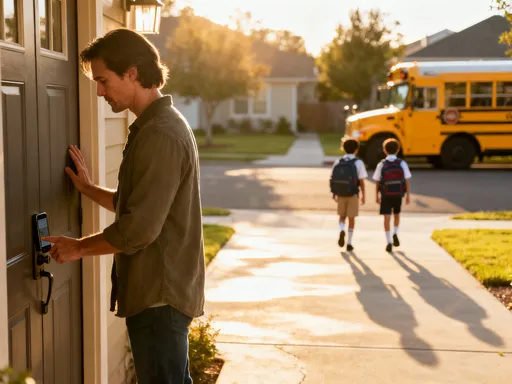
For my teenage daughter, it’s been a game-changer. She comes home from basketball practice around 6:30, and within seconds, I get a message: “Front door opened. System disarmed by Emma.” I don’t have to hover. I don’t have to call. I just know she’s safe. And she loves that she has her own access code—feels grown-up, responsible. It’s not about surveillance. It’s about trust with visibility.
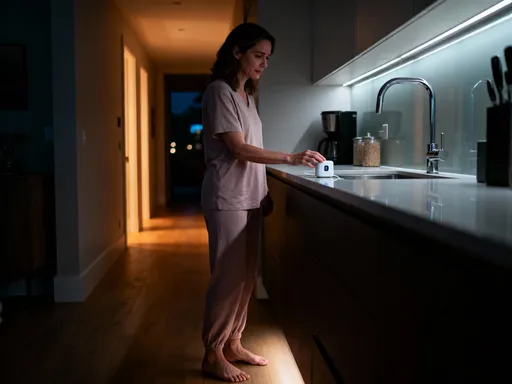
And at night? The system learns our routines. It knows when the kids go to bed, when the lights go off. If someone moves through the hallway at 2 a.m., I get a silent alert—just a small icon on my phone. Most nights, it’s me, grabbing water. But knowing I’d know if it weren’t? That changes everything. Safety isn’t about fear. It’s about knowing.
Avoiding the Tech Traps: What to Skip and What to Prioritize
Let’s be honest—some smart home features sound amazing until you try them. We tested a system with facial recognition. The idea? It would recognize family members and disarm automatically. Sounds futuristic, right? In reality, it failed constantly. My husband’s beard? Not recognized. My daughter with a hat? Flagged as a stranger. Even in good lighting, it struggled. After a week of false alarms and frustration, we turned it off. It wasn’t reliable. And reliability is non-negotiable.
Another trap: ultra-high-resolution cameras. Sure, 4K sounds impressive. But if the app buffers every time you open it, what good is it? We tried one system where the video feed froze during a storm—exactly when we needed it most. That taught us a hard lesson: specs don’t matter if the system can’t deliver when it counts. We switched to a simpler camera with solid performance, even on spotty Wi-Fi.
Here’s what we learned to prioritize: battery backup. During a power outage last winter, our system stayed online for over four hours. That wasn’t luck. It was planning. We also made sure it used cellular data as a backup, so even if the internet went down, alerts still came through. And the app? We tested it with both of us—my husband on Android, me on iPhone. If it wasn’t smooth on both, it wasn’t for us.
We also skipped the fancy voice commands. “Hey, system, arm the house” sounds cool, but what if your voice is hoarse? Or the kids are loud? We wanted something we could trust with a tap, not a phrase. Simplicity won every time. Because when it comes to safety, you don’t want gimmicks. You want something that works—quietly, consistently, without fanfare.
Setting It Up Without the Stress
I’ll admit, I was nervous about installation. I pictured drilling, wiring, a tangled mess of cables. But modern systems? Most are DIY-friendly. Ours came with adhesive mounts, clear instructions, and a setup app that walked us through every step. We did it over a weekend, with my husband handling the sensors and me naming the zones.
Placement mattered. We didn’t put motion detectors too high—our dog likes to jump on the couch, and we didn’t want false alarms. The front door sensor went just above the lock, where it wouldn’t be blocked by wind or snow. We added one to the basement window that floods sometimes—now we get a water alert if it’s left open in the rain. Little things, but they make a big difference.
Naming the zones made it personal. Instead of “Zone 3,” we called it “Kids’ Wing.” The back patio became “Grill Zone.” When an alert comes, I know exactly where it is—no guessing. And we trained everyone. My daughter set her own bedtime routine: brush teeth, read, disarm her room’s motion sensor. Grandma got a large-button remote—simple, tactile, no screen needed.
And yes, there were hiccups. One morning, my son sang “I’m home!” into the smart doorbell, and the system thought it was a voice command. It disarmed itself. We laughed—but then we fixed it by disabling voice detection during school hours. The point isn’t to be perfect. It’s to learn, adjust, and keep going. Now, the system isn’t a chore. It’s part of how we live.
The Unexpected Perks No One Talks About
I thought the system was just about safety. But it gave us so much more. One winter, I noticed the thermostat kept kicking on at night—even though we’d set it to eco mode. The system’s energy report showed the living room door was left open for hours. Turns out, the dog had pushed it ajar. We closed it, saved on heating, and learned to check door seals. That tiny alert saved us $40 on the electric bill.
Then there’s the stove. I used to text my husband, “Did you turn it off?” at least once a week. Now, if the kitchen motion sensor detects no activity but the stove was on, I get a reminder. Not a nag. A nudge. And since we’ve added smart plugs to lamps and space heaters, we can turn them off remotely—no more “Did I leave the bathroom fan on?” anxiety.
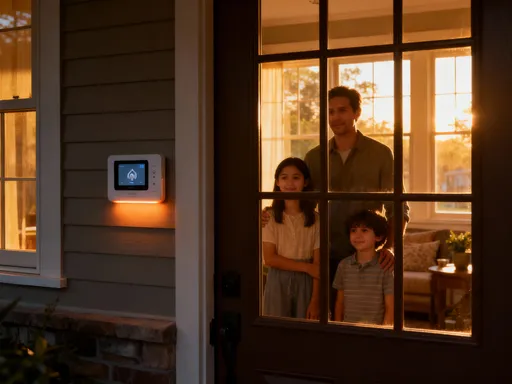
But the biggest surprise? How it eased my nighttime worry. I used to lie awake, mentally checking doors, windows, locks. Now, with one glance at my phone, I can see everything is secure. That small green light—“All systems armed”—is like a lullaby. I sleep deeper. I wake up calmer. And when I do get an alert, it’s not panic. It’s information. My body doesn’t go into fight-or-flight mode anymore. It just checks the screen.
It’s funny—what started as a fear-based decision became a tool for care. We’re more aware of our home, our habits, our energy use. We talk more about safety, not because we’re scared, but because we’re connected. The system didn’t make us paranoid. It made us present.
Why This Isn’t Just a Gadget—It’s a Family Decision
When we first talked about getting a security system, my husband said, “Are we really that worried?” And I said, “No. But I want to *stop* worrying.” That shift—from fear to freedom—is what changed everything. This wasn’t about reacting to a threat. It was about creating a home where we could relax, truly relax, knowing we’d done what we could.
Choosing the system became a family project. We sat together, listed our needs, tested apps, even let the kids pick the chime sound (they chose a soft bell, not a siren). Giving them their own codes made them feel involved, not watched. My daughter said, “Now I can let myself in after practice. I’m responsible.” That’s not just safety. That’s confidence.
And it brought us closer. We started having real conversations about what safety means—how it’s not just locks and alarms, but communication, trust, preparation. We practiced what to do if the alarm goes off. We talked about emergency contacts. It wasn’t scary. It was empowering.
Now, when I walk into the house, I don’t check the door. I check the app. And when I see that everything is secure, I breathe. That breath—that quiet, steady inhale—is worth more than any feature. Because peace of mind isn’t a product. It’s a feeling. And for the first time in years, it’s one I don’t have to fight for. It’s just there, waiting, every time I come home.