I used to lie awake worrying about Mom: How smart safety tools gave our family peace of mind
Living alone shouldn’t mean living in fear. I’ll never forget the knot in my stomach every time my mom called late at night—was she okay, or did something go wrong? Like many families, we struggled with the quiet anxiety of distance. But everything changed when we started using simple, everyday tech to stay connected. It wasn’t about high-tech fixes—it was about trust, care, and feeling close even when miles apart. This is how we found calm, one smart choice at a time.
The Night Everything Changed: When Worry Became Too Heavy
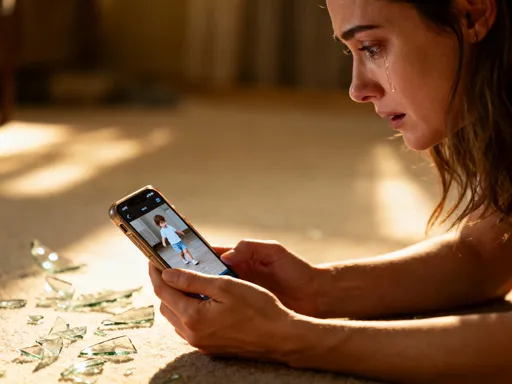
It was 2:17 a.m. when my phone rang. Just the sound of it vibrating on the nightstand sent a cold wave through me. My hands shook as I reached for it. It was Mom. “Honey,” she said, her voice steady but thin, “I think I twisted my ankle getting up to get water. I’m okay, but I’m sitting on the bathroom floor.” In that moment, everything shifted. I was 90 minutes away, half-awake, powerless. I called a neighbor, then an ambulance. But by the time help arrived, she’d been sitting there for over an hour—cold, uncomfortable, and trying so hard not to worry me.
That night wasn’t the first time I’d worried, but it was the first time I realized how fragile our sense of safety really was. Mom had always been independent—lived in the same house for 35 years, cooked Sunday dinners for us, walked the dog every morning without fail. She didn’t want to move, and honestly, we didn’t want her to. But we also didn’t want her to fall and not be found for hours. The guilt gnawed at me. Could I have done something sooner? Should we have done something differently?
What surprised me most was how common this fear was. When I mentioned it to my sister, she admitted she’d been checking Mom’s Facebook page every night, hoping to see a new post as proof she was up and moving. My cousin told me she kept a shared calendar just to track when her dad took his pills. We were all doing these little, quiet things—trying to feel in control without overstepping. The emotional weight of it was heavier than any gadget could measure. We weren’t just afraid of accidents. We were afraid of missing them. And that fear was pulling us further apart, even as we tried to stay close.
So we made a promise—to ourselves and to Mom. We wouldn’t wait for another scare. We’d find a way to support her independence while giving ourselves some peace. Not because we didn’t trust her, but because we loved her too much to live in constant worry. That decision didn’t come with a dramatic plan. It came with a conversation. And that conversation led us to something we never expected: technology that didn’t feel cold or clinical, but warm, familiar, and quietly powerful.
Not Surveillance—Care: Reframing Safety Tech for Aging Loved Ones
When I first mentioned “smart devices” to Mom, I saw it in her eyes—the flicker of resistance. “You mean cameras? Like they’re watching me?” she asked. My heart sank. I hadn’t realized how easily these tools could feel like an invasion. To her, it sounded like we were turning her home into a monitored zone, like she was losing control. I quickly realized that the biggest hurdle wasn’t the tech itself—it was the story we were telling about it.
So we changed the story. Instead of saying, “We need to keep an eye on you,” we said, “We want to make sure you can keep doing everything you love—without us stressing every time the phone doesn’t ring.” We sat down together, all three of us—me, my sister, and Mom—and talked about what safety really meant. For her, it wasn’t about being watched. It was about feeling secure, capable, and respected. For us, it was about knowing she was okay without having to call and interrupt her day.
We made a few ground rules. No cameras in private spaces. No sharing data with anyone outside the family. And every device had to be something she could turn off or adjust herself. That last part was key. She needed to feel like she was in charge—not us. Once she saw that these tools weren’t about control but about connection, her resistance softened. “If it means you girls can sleep better,” she said, “then I’m willing to try.”
What we learned is that technology, when introduced with empathy, can actually strengthen trust instead of eroding it. It wasn’t about installing a system. It was about building a shared language of care. The devices we chose weren’t flashy or complicated. They were simple, quiet, and designed to blend into daily life. They didn’t announce themselves. They just worked—like a good friend who shows up when needed but never overstays.
And that shift in mindset made all the difference. We weren’t setting up surveillance. We were setting up support. We weren’t watching her. We were checking in—passively, gently, and only when it mattered. It was like leaving a light on in the hallway so someone knows they’re not alone. The tech didn’t replace our relationship. It deepened it.
The Front Door That Checks In: Smart Entry Systems That Speak Love
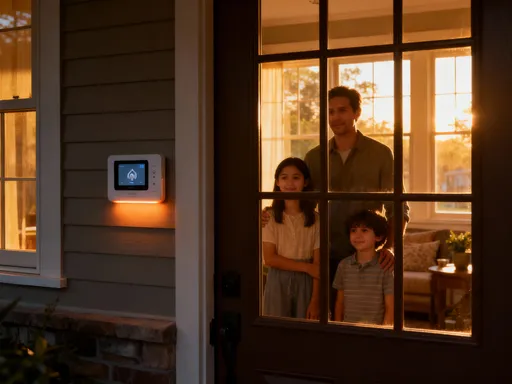
One of the first things we installed was a smart doorbell with a camera. I know it sounds basic, but it became one of the most meaningful tools we use. It wasn’t for catching package thieves or scaring off strangers—though it does that too. It was for the quiet moments. Like when Mom comes home from the grocery store, and I get a little notification on my phone: “Front door—motion detected.” I tap the app, and there she is, putting her key in the lock, bags in hand, humming to herself. In that instant, I know she’s safe. No call needed. No “Did you get home okay?” text. Just peace.
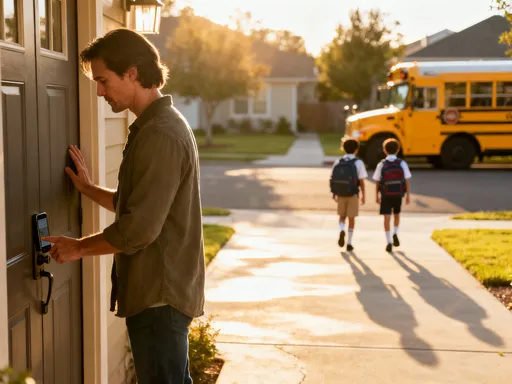
We paired it with a smart lock, which was a bigger step for her. At first, she worried about forgetting her code or the battery dying. So we chose one with a physical key backup and a long-lasting battery—some last up to a year on a single charge. We set it up so she could unlock it with a code, her fingerprint, or even just by approaching with her phone. But the real win? She can see who’s at the door without opening it. When the delivery guy drops off her online order, she checks the screen, sees it’s safe, and unlocks remotely. No more leaning through the storm door or guessing who’s there.
For us, the magic isn’t in the lock itself. It’s in the routine. Every evening, when she comes back from her walk, I get that little alert. It’s become our silent check-in. My sister even set up a family group chat where we share the funniest doorbell moments—like the time the neighbor’s cat sat and stared at the camera for ten minutes. It’s turned into something joyful, not just functional.
Setting it up was easier than we thought. Most systems come with step-by-step apps that guide you through installation. We did it in an afternoon—no electrician, no drilling panic. And because it connects to Wi-Fi, we can all access it from our phones. Mom has full control—she decides who gets access and can revoke it anytime. That sense of ownership made all the difference. This wasn’t us taking over. It was us joining her in a new way of living.
Lights That Know the Rhythm of Home: Automation with Heart
Have you ever driven past a house with all the lights off and felt a little tug of worry? That was us—every time we thought about Mom’s house at night. Before, if the lights were out, we didn’t know if she was asleep, out, or just not moving. Now, we don’t have to guess. We use smart lighting to create a rhythm that feels both safe and comforting.
We didn’t go overboard—just a few key lights: the porch, the living room, and one in the kitchen. We programmed them to turn on at sunset and off at midnight, with a soft glow that doesn’t feel harsh. We called it the “Evening Calm” routine. But the real benefit? It signals normalcy. If I’m up late working and I check the app, seeing that the living room light is on means she’s awake, maybe watching TV or reading. If it’s off, I know she’s in bed. No questions. No interruptions.
We also set up an “Away Mode” for when she visits us or goes on short trips. The lights turn on and off at random times, making it look like someone’s home. It’s not just about deterring break-ins—it’s about giving us all peace of mind. And when she returns, the porch light turns on automatically as she approaches. “It feels like the house is happy to see me,” she said once. That made me tear up.
The setup was simple. We bought bulbs that screw in like regular ones and connect to her Wi-Fi. No rewiring, no electrician. Through the app, we created schedules and even adjusted the color—warmer in the evening, brighter in the morning. She can control them with her voice or a switch, so it never feels like she’s losing convenience.
But the deeper win? It gave us a shared sense of presence. My daughter loves checking the app to see if “Nana’s light is on.” It’s become part of our family ritual. And for Mom, it’s not about being watched. It’s about being remembered. The lights don’t just brighten the room—they brighten the connection.
The Little Sensor That Said “She’s OK”: Motion and Routine Tracking
One of the hardest things about distance is not knowing someone’s routine. Is she up? Did she eat? Is she moving around like she usually does? We didn’t want to call every morning and ask—we didn’t want to become the “worry patrol.” But we also didn’t want to miss a day when something felt off. That’s where motion sensors came in.
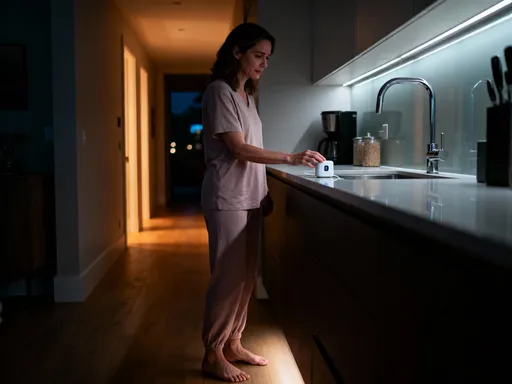
We placed small, discreet sensors in three spots: near the kitchen sink, by the bedroom door, and in the hallway. They don’t record video or audio—just detect movement. And they don’t send constant updates. Instead, they check in silently. If there’s no movement in the kitchen by 10 a.m., I get a gentle alert: “No activity detected this morning.” That doesn’t mean something’s wrong. It just means I should call and say, “Hey Mom, how’s your day going?” Maybe she slept in. Maybe she’s fine. But now I know to check in—without waiting for a crisis.
We also added a water usage monitor to her main pipe. It tracks how much water flows through the house each day. A normal morning—tea, washing up, flushing the toilet—shows a certain pattern. If there’s no water use for 24 hours, it triggers a notification. Again, not panic. Just awareness. It’s like a quiet whisper saying, “Hey, something’s different today.”
Privacy was our top concern. These devices don’t track her every move. They don’t know what she’s doing—just that she’s moving. And she can disable them anytime. We reviewed the data together at first, just to make sure it felt right. After a few weeks, she said, “I forget they’re even there.” That was the goal—not to create anxiety, but to dissolve it.
The first time the system worked exactly as it should was a rainy Tuesday. No kitchen motion by 11 a.m. I called. She’d slipped on a wet spot near the sink, nothing serious, but she was sore and stayed in bed. Because of that alert, I was able to call her doctor, arrange a check-in from her neighbor, and send over soup. It wasn’t a crisis, but it could have been if we’d waited. That little sensor didn’t just say “She’s OK.” It said, “We’re here.”
Voice That Connects, Not Just Commands: Smart Speakers with Soul
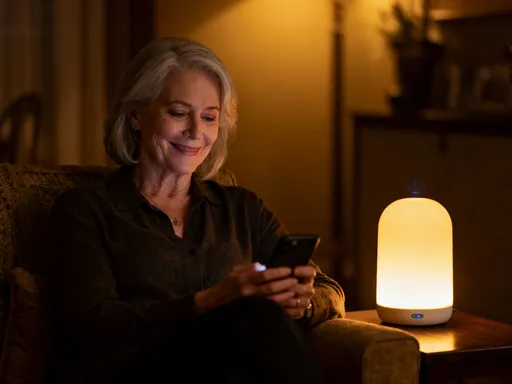
We gave Mom a smart speaker for her birthday. I’ll admit, I thought it would be mostly for music and weather updates. But it became something much deeper. It became her companion. She talks to it every morning: “Good morning,” she says, and it responds with the day’s forecast, her calendar, and a gentle reminder to take her vitamins. It sounds simple, but it gives her a sense of routine and connection.
What we didn’t expect was how much she’d use the voice messages. We set up a family group, and now we send little audio notes throughout the day. My son says, “Nana, I made cookies!” and she hears it the moment she walks into the kitchen. I send, “Thinking of you,” and she smiles. It’s not a text. It’s our voices—warm, familiar, full of love. She told me, “It’s like you’re right here with me.”
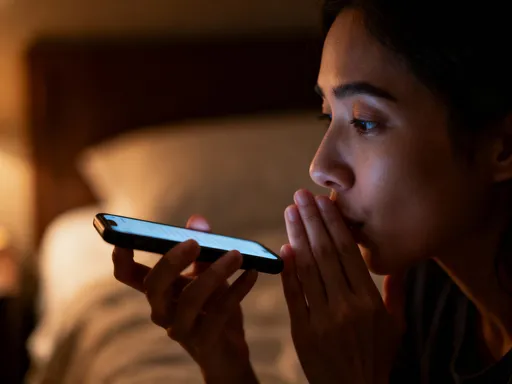
We also programmed it for safety. She can say, “Call for help,” and it dials both of us automatically. No fumbling for the phone. No panic. Just a calm, clear connection. We tested it once—just to be sure—and she said afterward, “Knowing it’s there makes me feel braver.”
And it’s not just for emergencies. She uses it to play her favorite hymns, set timers while cooking, and even listen to audiobooks. My sister and I take turns adding new books to her playlist. It’s become a way to share joy, not just safety.
The speaker didn’t replace our calls. It made them better. Now, when we do talk, it’s not about checking up. It’s about catching up. The little moments in between—those are what keep loneliness at bay.
Peace Is a Shared Feeling: How Tech Brought Our Family Closer
Looking back, I realize we weren’t just solving a safety problem. We were healing a fear that had been quietly growing for years. The late-night calls, the unanswered texts, the constant wondering—those weren’t just inconveniences. They were tiny cuts on the heart, each one a reminder of how far apart we felt.
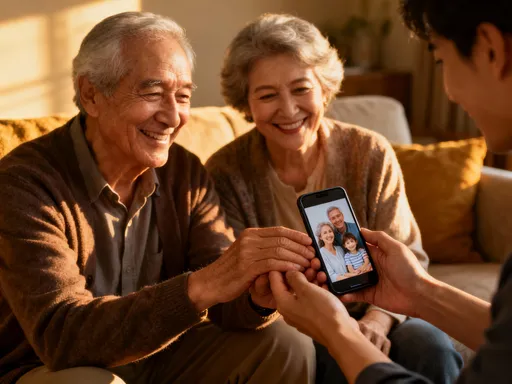
But now, something has shifted. It’s not that we worry zero percent—because love means we’ll always care. But the weight of that worry? It’s lighter. We don’t live in fear anymore. We live in connection. The alerts, the lights, the voice messages—they’re not just tools. They’re threads in a tapestry of care, woven quietly into our days.
And Mom? She feels it too. She told me recently, “I don’t feel watched. I feel loved.” That one sentence changed everything. Because that’s what this was always about—not control, not surveillance, not even safety in the narrowest sense. It was about love made visible. It was about saying, “You matter. You’re not alone. We’re here.”
The best tech wins aren’t the ones with the most features. They’re the ones that help us live with more ease, more joy, and more peace. They’re the ones that let us be human—imperfect, caring, and deeply connected. What we built wasn’t a high-tech fortress. It was a bridge. And every time that doorbell chimes or that light turns on, it’s not a machine speaking. It’s us. Still close. Still family. Still together, even when we’re apart.