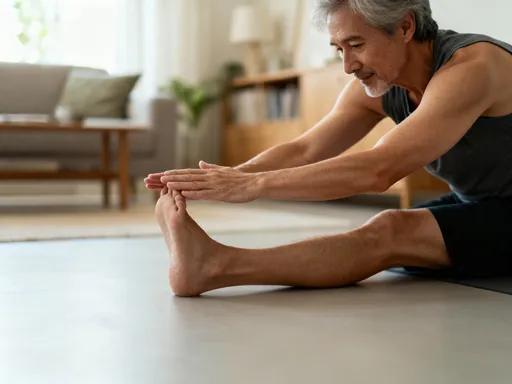
How Western Medicine-Backed Exercises Transformed My Recovery
Recovering from an injury or chronic condition can feel slow and frustrating. I once struggled with daily pain—until I discovered rehabilitation techniques grounded in Western medicine. These science-supported exercises didn’t promise miracles, but they delivered real, measurable progress. In this article, I’ll share how combining clinical insight with practical movement strategies helped me regain strength, mobility, and confidence—offering hope for anyone navigating recovery. The journey wasn’t fast, but it was reliable, built on decades of medical research and patient outcomes. What began as a desperate search for relief became a profound lesson in trusting the process, listening to my body, and embracing the power of evidence-based care.
The Hidden Frustration of Slow Recovery
Recovery from injury or long-term health conditions often unfolds at a pace that feels maddeningly slow. Many individuals experience persistent discomfort, stiffness, or weakness that limits their ability to perform even simple daily tasks—like lifting a grocery bag, climbing stairs, or playing with children or grandchildren. These limitations can erode self-confidence and lead to emotional strain, including feelings of helplessness, irritability, or low mood. The physical struggle is real, but so is the psychological toll of waiting for improvement that seems just out of reach.
One of the most common reasons people abandon rehabilitation efforts is the lack of immediate results. Unlike quick fixes or dramatic interventions, physical recovery often progresses in small, incremental steps. A person might not notice meaningful changes for weeks, even when following a correct protocol. This delay can be discouraging, especially when pain persists despite effort. It's easy to question whether the exercises are working or if time and energy would be better spent elsewhere. Without visible progress, motivation wanes, and consistency suffers.
This is where evidence-based rehabilitation becomes essential. Western medical approaches rely on measurable outcomes, objective assessments, and structured timelines to track recovery. Instead of relying on guesswork or anecdotal success stories, clinicians use tools such as range-of-motion measurements, strength testing, and functional assessments to evaluate improvement—even when it’s not immediately felt. Knowing that progress is being documented scientifically helps maintain trust in the process. It reassures patients that healing is occurring, even if slowly, and encourages continued commitment to the prescribed regimen.
Moreover, having a clear framework reduces anxiety about the unknown. When individuals understand the typical recovery timeline for their condition—such as six to eight weeks for soft tissue healing or three to six months for post-surgical rehabilitation—they are more likely to remain patient. Education about the biological processes behind tissue repair, nerve regeneration, and muscle reconditioning empowers patients to view setbacks as part of the journey rather than signs of failure. This shift in mindset is critical for long-term success.
Why Western Medicine Stands Out in Rehabilitation
Western medicine plays a central role in modern rehabilitation by providing a systematic, diagnosis-driven approach to recovery. Unlike generalized wellness trends or alternative therapies that may lack scientific validation, Western medical practice is rooted in clinical evaluation, anatomical understanding, and peer-reviewed research. When someone sustains an injury or develops a musculoskeletal condition, healthcare professionals begin with a thorough assessment—often involving physical exams, imaging studies like X-rays or MRIs, and functional testing—to determine the exact nature and extent of the problem.
This diagnostic precision allows for personalized treatment planning. For example, two individuals with lower back pain may receive entirely different exercise prescriptions based on whether their condition stems from disc issues, muscle imbalances, or joint dysfunction. Western medicine does not treat symptoms in isolation; it seeks to identify root causes and address them through targeted interventions. This approach increases the likelihood of effective recovery while minimizing the risk of worsening the condition through inappropriate activity.
Another strength of Western medicine is its reliance on reproducible methods and standardized protocols. Physical therapy programs for conditions such as rotator cuff injuries, knee osteoarthritis, or stroke rehabilitation have been refined over decades through clinical trials and real-world application. These protocols are continuously updated as new research emerges, ensuring that patients receive care aligned with the latest scientific understanding. This commitment to evidence ensures that treatments are not only safe but also consistently effective across diverse populations.
In contrast, some alternative or unproven methods may offer appealing promises but lack rigorous testing. While complementary practices such as yoga or mindfulness can support overall well-being, they should not replace medically supervised rehabilitation when structural damage or significant functional loss is present. Relying solely on non-evidence-based therapies can lead to delayed healing, compensatory movement patterns, or further injury. Western medicine offers a balanced path—integrating proven physical therapies with medical oversight to optimize outcomes.
The Science Behind Therapeutic Exercise: How Movement Heals
It may seem counterintuitive, but movement is one of the most powerful tools in healing. Far from aggravating injury, properly prescribed therapeutic exercise supports tissue repair, enhances neuromuscular function, and restores joint health. The human body is designed to move, and when movement is restricted due to pain or immobilization, systems begin to deteriorate. Muscles weaken, connective tissues stiffen, and circulation decreases—all of which slow recovery. Controlled, progressive exercise reverses these effects by stimulating biological processes essential for healing.
One of the primary benefits of therapeutic movement is improved blood flow. Enhanced circulation delivers oxygen and nutrients to injured tissues while removing metabolic waste products that contribute to inflammation and soreness. For instance, after an ankle sprain, gentle range-of-motion exercises help flush out excess fluid and reduce swelling. Similarly, in cases of chronic tendinopathy, eccentric loading exercises have been shown to stimulate collagen production and remodel damaged tendon fibers. These physiological changes are not theoretical—they are observable under imaging and measurable in clinical settings.
Another key mechanism is joint lubrication. Synovial fluid, which nourishes and cushions cartilage within joints, circulates most effectively when the joint moves through its available range. This is particularly important for individuals recovering from surgeries such as total knee replacement or those managing degenerative joint conditions. Without regular motion, joints can become stiff and painful, leading to further immobility. Therapeutic exercises that emphasize smooth, controlled movements help maintain joint health and prevent long-term stiffness.
Equally important is neuromuscular re-education—the process of retraining the brain and nervous system to properly control muscles. After an injury, the body often adopts protective movement patterns, such as limping or favoring one side. While these adaptations provide short-term relief, they can lead to imbalances and secondary injuries over time. Targeted exercises help recalibrate muscle activation sequences, improve coordination, and restore normal movement patterns. For example, someone recovering from a hip fracture may initially struggle with balance and weight shifting. Specific drills that challenge stability in a safe environment gradually rebuild neural pathways responsible for upright posture and gait.
A crucial distinction in rehabilitation is understanding the difference between harmful strain and beneficial loading. While excessive force or improper technique can worsen injury, appropriate mechanical stress is necessary for tissue adaptation. This principle, known as Wolff’s Law in bone healing and Davis’s Law in soft tissue remodeling, underscores that tissues strengthen in response to controlled demand. A physical therapist designs exercises to apply the right amount of load—at the right time—to promote healing without causing harm.
Core Exercise Techniques Used in Clinical Rehab Programs
Modern rehabilitation programs incorporate a variety of scientifically validated exercise techniques, each serving a specific purpose in the recovery process. These methods are not one-size-fits-all; instead, they are selected and modified based on the individual’s diagnosis, stage of healing, and functional goals. Among the most commonly used are active range-of-motion exercises, progressive resistance training, and neuromuscular re-education techniques—all of which work synergistically to restore strength, flexibility, and coordination.
Active range-of-motion (AROM) exercises are typically introduced early in rehabilitation, especially after periods of immobilization. These involve moving a joint using the body’s own muscles, without external assistance. For example, after a wrist fracture, a patient might begin by gently opening and closing the hand or rotating the forearm. AROM exercises help prevent joint stiffness, maintain muscle engagement, and stimulate circulation. They are particularly valuable in post-surgical recovery, where early movement reduces the risk of adhesions and scar tissue formation.
Progressive resistance training is another cornerstone of clinical rehab. This method involves gradually increasing the load placed on muscles and connective tissues as healing progresses. Resistance can come from body weight, resistance bands, free weights, or machines, depending on the patient’s needs. For instance, someone recovering from anterior cruciate ligament (ACL) reconstruction may start with straight-leg raises and progress to mini-squats, then to weighted lunges as strength improves. The key is progression—advancing only when the body demonstrates readiness—to avoid overloading healing tissues.
Neuromuscular re-education focuses on improving motor control and proprioception, which is the body’s ability to sense its position in space. This is especially important after injuries that affect balance or coordination, such as ankle sprains or neurological conditions. Exercises may include standing on one leg, using balance boards, or performing controlled movements with eyes closed. These activities challenge the nervous system in a safe way, helping the brain relearn how to stabilize joints and respond to changes in terrain or posture.
These techniques are often combined into comprehensive protocols tailored to specific conditions. For example, a standard post-surgical knee rehabilitation program may include AROM exercises to restore flexion and extension, resistance training to rebuild quadriceps and hamstring strength, and balance drills to improve joint stability. Similarly, shoulder stabilization programs for rotator cuff injuries emphasize scapular control, rotator cuff activation, and gradual strengthening through functional movement patterns. Each phase builds on the previous one, ensuring a safe and sustainable return to daily activities.
Building Your Own Rehab Routine: A Step-by-Step Framework
While professional guidance is essential, individuals can take an active role in shaping their recovery by understanding the structure of effective rehabilitation. A well-designed rehab routine follows a logical sequence: assessment, goal setting, exercise selection, and progression tracking. This framework ensures that efforts are focused, safe, and aligned with medical recommendations. It also empowers patients to participate meaningfully in their healing journey, fostering a sense of ownership and accountability.
The first step is a comprehensive assessment conducted by a qualified healthcare provider, such as a physical therapist or sports medicine physician. This evaluation includes reviewing medical history, performing physical tests, and identifying limitations in strength, flexibility, or movement quality. Imaging results, if available, further inform the diagnosis. Based on this information, the clinician establishes a baseline and determines the appropriate starting point for exercise. Attempting to create a routine without this foundational step risks selecting inappropriate exercises or advancing too quickly.
Once assessed, the next phase is goal setting. Goals should be specific, measurable, and realistic. Instead of vague intentions like “feel better,” a patient might aim to “walk for 20 minutes without pain” or “raise the arm overhead within six weeks.” These targets provide direction and motivation, making it easier to measure progress over time. Short-term goals act as milestones, while long-term goals reflect full functional recovery.
Exercise selection follows the principle of individualization. Not every stretch or strengthening move is suitable for every condition. A physical therapist selects exercises based on the injury type, healing stage, and personal factors such as age, fitness level, and lifestyle demands. For example, a mother recovering from back surgery may prioritize core stabilization exercises that support lifting and carrying children, while an older adult recovering from a hip replacement may focus on sit-to-stand transfers and stair negotiation.
Finally, tracking progression is vital for maintaining momentum and preventing plateaus. This can involve keeping a simple log of exercises performed, repetitions completed, and any symptoms experienced. Some patients use mobile apps or wearable devices to monitor activity levels and movement quality. Regular check-ins with a therapist allow for adjustments—such as increasing resistance, modifying technique, or introducing new exercises—based on observed improvements. This dynamic approach ensures that the routine evolves alongside the healing process.
Common Mistakes That Slow Down Recovery (And How to Avoid Them)
Even with the best intentions, many individuals unknowingly hinder their recovery by making preventable errors. One of the most frequent is overexertion—pushing too hard, too soon, in hopes of speeding up healing. While dedication is admirable, exceeding the body’s current capacity can lead to increased inflammation, delayed tissue repair, or reinjury. Pain is not a reliable indicator of progress; sharp or persistent discomfort during or after exercise often signals that the load was too great. The principle of gradual progression must be respected to allow tissues time to adapt.
Another common mistake is skipping warm-up and cool-down phases. Jumping directly into intense exercise without preparing the body increases the risk of strain, particularly in stiff or healing tissues. A proper warm-up—such as five to ten minutes of light aerobic activity followed by dynamic stretching—increases blood flow and primes muscles and joints for movement. Similarly, cooling down with gentle stretching helps reduce muscle tightness and supports recovery. These phases are not optional extras; they are integral components of safe rehabilitation.
Ignoring pain signals is equally detrimental. Some patients believe they must “push through the pain” to get better, but this mindset can be harmful. There is a difference between discomfort associated with effort and pain that indicates tissue stress or damage. The latter should never be ignored. A useful guideline is the “pain scale rule”: mild discomfort up to a 3 out of 10 during or after exercise may be acceptable, but anything higher warrants modification or rest. Communicating openly with a therapist about symptoms ensures that the program remains safe and effective.
Inconsistency is another barrier to progress. Recovery requires regular, repeated stimulation to build strength and retrain movement patterns. Doing exercises sporadically—only when pain flares up or when feeling motivated—leads to fragmented results. Establishing a consistent schedule, such as performing prescribed exercises at the same time each day, improves adherence and outcomes. Pairing the routine with a daily habit, like after morning coffee or before bedtime, can enhance long-term compliance.
Finally, failing to seek professional guidance is a critical error. While online resources and fitness apps offer general advice, they cannot replace individualized care. A physical therapist evaluates movement quality, corrects form, and adjusts exercises based on real-time feedback. Self-directed rehab without supervision risks reinforcing poor mechanics or missing underlying issues. Trusting expert guidance and maintaining open communication throughout the process significantly improves the chances of full recovery.
Long-Term Benefits: Beyond Healing to Prevention and Strength
The value of rehabilitation extends far beyond the resolution of pain or the restoration of mobility. When completed thoughtfully, a medically guided exercise program lays the foundation for long-term health and resilience. One of the most significant long-term benefits is the reduced risk of recurrence. Many musculoskeletal injuries—such as ankle sprains, lower back strains, or shoulder impingements—tend to reoccur when underlying weaknesses or movement dysfunctions are not addressed. Rehab exercises correct these imbalances, making the body more resistant to future injury.
Additionally, consistent participation in therapeutic movement enhances overall functional fitness. Daily activities become easier and safer—whether it’s gardening, carrying groceries, playing with grandchildren, or traveling. Improved posture, balance, and core stability contribute to greater confidence in movement and a lower risk of falls, particularly in older adults. These gains translate into a higher quality of life, allowing individuals to remain independent and engaged in the activities they love.
Rehabilitation also fosters a deeper awareness of the body. Through repeated practice, individuals learn to recognize early signs of strain, understand proper alignment, and move with greater efficiency. This body literacy supports lifelong health, enabling people to adjust their habits before minor issues become serious problems. It encourages proactive self-care rather than reactive treatment.
Ultimately, recovery is not just about returning to where you were—it’s about building a stronger, more resilient version of yourself. The discipline, patience, and self-awareness developed during rehabilitation can positively influence other areas of life, from stress management to daily routines. By embracing science-backed methods and trusting the process, individuals do more than heal; they transform their relationship with their bodies and their health. This journey, though challenging, offers lasting rewards for anyone willing to invest in it.